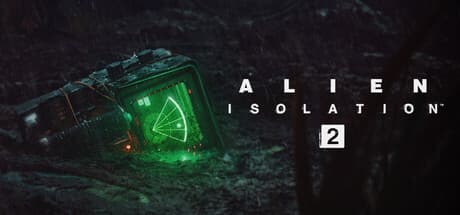
Creative Assembly finally said the thing fans have been asking about for almost twelve years. At Summer Game Fest on June 5, 2026, the studio announced Alien: Isolation 2, with a teaser that drops a new protagonist onto a storm-battered colony world and into a Weyland-Yutani site called Kurosaki Station. There is no release date yet. The pitch is a more intelligent Xenomorph, harsher environments, and more tension.
I played the original Alien: Isolation to the end, hid in too many lockers, and came away thinking it was one of the few horror games where the monster actually felt like it was thinking. So the part of the announcement I care about is not the storm planet or the new station. It is the promise of a smarter alien, because the first game's alien was already a small masterpiece of game AI, and "smarter" is a surprisingly easy way to ruin it.
The trick was two brains, not one
People assume the scary alien in Isolation was one big clever AI. It was two systems, and the split is the whole reason it worked.
There was a director AI (the macro layer) and the alien AI (the micro layer). The director always knows where you are. The alien does not. The director's only job is to nudge the alien toward your general area now and then, dropping a hint about which part of the level to search. The alien itself has to find you using its own senses: sound, line of sight, the spots it has learned you like to hide in. The creature is never handed your coordinates. That single rule, the alien never cheats, is what makes its behavior read as hunting instead of scripting.
The senses matter because they give you, the player, a language to fight back in. You drop the flashlight, you walk instead of run, you lean out of the locker slowly. You are playing against something with real inputs, not against a state machine that already won.
The menace gauge is the part people forget
The clever bit is not that the alien finds you. It is that the game knows when to make it leave.
The director tracks a value the team called the menace gauge. It is not a kill counter or an aggression stat. It is an estimate of how tense you feel right now, built from things the system can actually observe:
- How close the creature is, roughly within short walking distance.
- Whether you have direct line of sight to it.
- Whether it reads as close on your motion tracker and could reach you fast.
When menace climbs past a threshold, the director does the counterintuitive thing. It pulls the alien away, sends it into a neighboring room or up into the vents. Constant pressure is not scary for long. It just turns into frustration, and frustration breaks immersion faster than a cheap death does. The release, those few seconds where you think it might be gone, is what makes the next encounter land.
If I sketch the loop in pseudocode, it is almost boringly simple, which is the point:
def director_tick(player, alien):
    menace = 0
    if alien.distance_to(player) < SHORT_WALK:
        menace += 2
    if player.has_line_of_sight(alien):
        menace += 2
    if alien.on_motion_tracker(player) and alien.can_reach(player):
        menace += 1

    if menace >= PEAK:
        alien.send_to(nearest_vent_or_adjacent_room())
    else:
        alien.hint(player.area)  # a nudge, never exact coordinates
The intelligence is not in any one line. It is in the restraint. The system spends most of its effort deciding when to back off.
A monster that is always present stops being a threat and becomes a chore. The horror lives in the gaps.
What "smarter" should and should not mean
This is where the sequel could go wrong. The easy reading of "more intelligent Xenomorph" is a creature that searches better, predicts your hiding spots, and corners you more often. Push that too far and you delete the menace gauge's whole reason to exist. An alien that never gives you room is not frightening, it is exhausting, and players will feel cheated rather than hunted.
The version of smarter I want is on the perception side, not the lethality side. A few things I would actually watch for:
- Senses I can reason about. New inputs are fine if I can learn and exploit them. Hidden omniscience is not.
- A menace model that still believes in silence. Keep the back-off behavior, tune it, do not remove it.
- Tells. The original alien telegraphed enough that a careful player could survive. Fairness is what made the fear feel earned.
The storm planet and the new station are set dressing. I will judge Alien: Isolation 2 on whether its director still has the discipline to walk the monster away when I am about to break. Get that right and the rest of the trailer's promises take care of themselves. Get it wrong and you have a very pretty game about an alien that will not leave you alone.
For another look at how restraint and horror shape a returning series, see the Gears of War: E-Day design discussion.